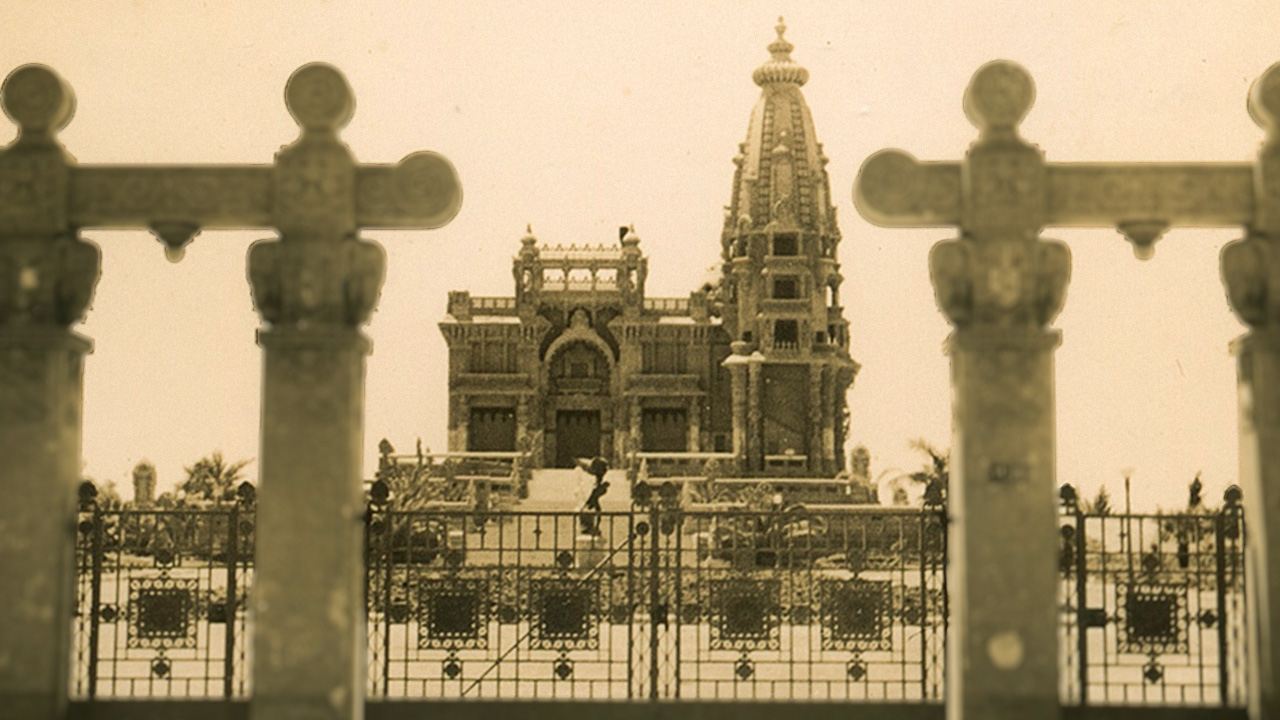
When one thinks of Egypt, one usually pictures the Great Pyramids of ancient times or the Islamic architecture of recent times. So when you come across Baron Empain Palace—a bizarre building inspired by Hindu and Cambodian temples—it seems out of place. It’s almost as if the Egyptians didn’t build it at all. That’s because it wasn’t.
Belgium-born Baron Édouard Empain, an extraordinarily wealthy industrialist best known for building the Paris Metro, built the palace. During the end of the 19th century, Empain’s construction company took on massive infrastructure projects worldwide, some financed by the Rothschilds – the most powerful dynasty in modern history.
As seen in previous articles, the Rothschilds are the definition of “occult elite,” and, as we’ll see, Empain shared a keen interest in the dark arts.
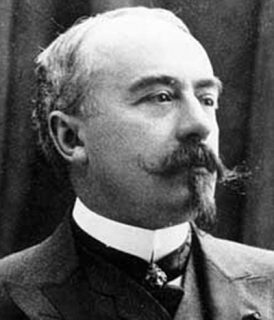
In 1904, Empain traveled to Egypt and convinced the local government to sell him 10 square miles of land North of Cairo. In this desert area, Empain built Heliopolis, a modern city of “leisure and luxury” that would eventually attract elite figures from Egypt and the Arab world. At its center, on an artificial mound, Empain built a palace that would become his family’s primary residence.
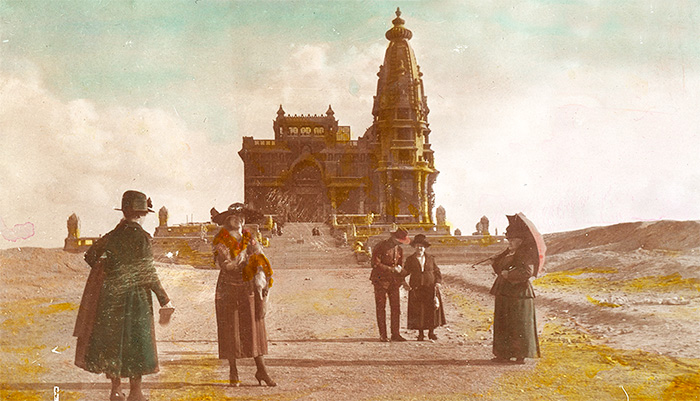
No expense or eccentricity was spared in building this palace. It was built with the finest materials and included some of the most intricate features imaginable. French architect Alexandre Marcel even erected the building on a rotating base, allowing occupants to view the entire city and bathe in sunbeams throughout the day. These strange steampunk-like characteristics lead some to claim that the building was constructed with the help of some form of unholy magic.
While the palace, like the surrounding city, was meant to be a place of “leisure and luxury,” some events inside its walls were neither leisurely nor luxurious. Here are some of the stories surrounding the palace:
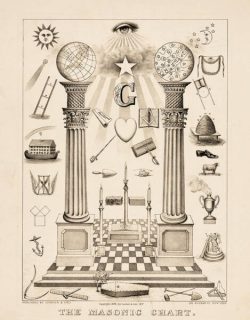
- Empain conducted occult rituals in the Palace’s basement, in a room where nobody was allowed to enter. Member of the Freemasons and other secret societies
- This basement room leads to a secret tunnel that connects the palace to the nearby Basilica Church.
- Empain’s daughter, who was paralyzed and riddled with psychological problems, could not leave the palace due to social stigma. She was found dead inside the building’s service elevator, in a probable suicide.
- Empain’s wife died by falling from the palace’s massive spiral staircase, in a probable suicide.
In 1929, Baron Empain died of a mysterious illness and, per his will, was buried in the crypt of the Basilica Church. Some years later, the palace was sold at an auction and soon became one of those creepy, abandoned places surrounded by mystery.
In the following decades, people believed the palace was “haunted,” reporting strange noises, odd sightings, and even flickering lights. There were also persistent rumors of orgies and satanic rituals taking place in the abandoned palace.
Despite its state of disrepair, the palace’s “energy” kept attracting a specific crowd. Its walls were “decorated” with graffiti depicting satanic symbols or unsettling words such as “evil evil ghost of death,” while countless bats flew around the premises.
In the early 2000s, the palace was thoroughly renovated and became a popular tourist attraction. Of course, the creepiest parts were closed off to the public, and the secret chambers were probably torn down. However, most of the palace’s art and sculptures were restored. While some stories about the palace are based on unreliable accounts, the works of art offer a clear glimpse into the mindset of its creator.
Here’s a closer look at the palace.
A Temple of Deceit
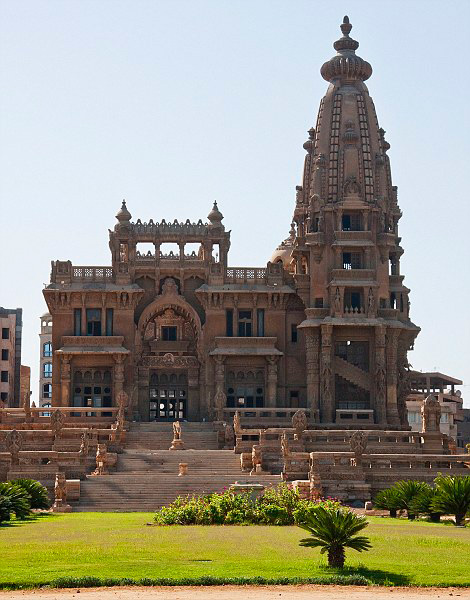
As you walk toward the palace’s entrance, you’re greeted by art from various origins, including Hinduism, Buddhism, Greco-Roman mythology, and the Bible, along with some pieces leaning toward the erotic. At first glance, these sculptures convey refinement and high spirituality.
However, a closer look at these sculptures and their subject matter reveals a darker narrative: they allude to the darker side of human nature and spirituality. While most sculptures were impaled or decapitated throughout the years by trespassers, their symbolic meaning remains intact.
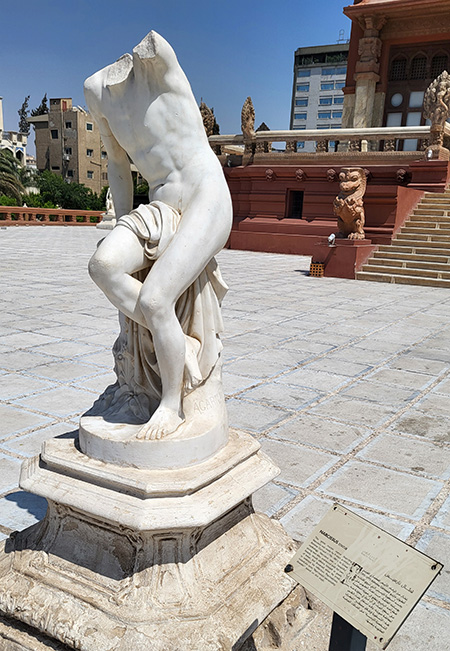
In Greek mythology, Narcissus was a young man who was so impossibly handsome that he fell in love with his own image reflected in a pool of water.
“As he reached his teenage years, the handsome youth never found anyone that could pull his heartstrings, indeed, he left in his wake a long trail of distressed and broken-hearted maidens, and one or two young men fell by the wayside too. Then, one day, he chanced to see his own reflection in a pool of water and, thus, discovered the ultimate in unrequited love and fell in love with himself. Naturally, this one-way relationship went nowhere, and Narcissus, unable to draw himself away from the pool, pined away in despair until he finally died of thirst and starvation.”
– World History Encyclopedia, Narcissus
Narcissus is the origin of the term “narcissism” and “narcissistic personality disorder,” a psychiatric condition marked by grandiosity, excessive need for attention and admiration, and an inability to empathize. In other words, Narcissus represents the exact opposite of a spiritual being. He is the embodiment of self-absorption.
Therefore, Narcissus’s welcoming of guests at Baron Empain Palace suggests this is not a temple of spirituality; it is the opposite: indulgence in worldly excess.
This happens to be the basis of Satanism. This next sculpture may confirm that.
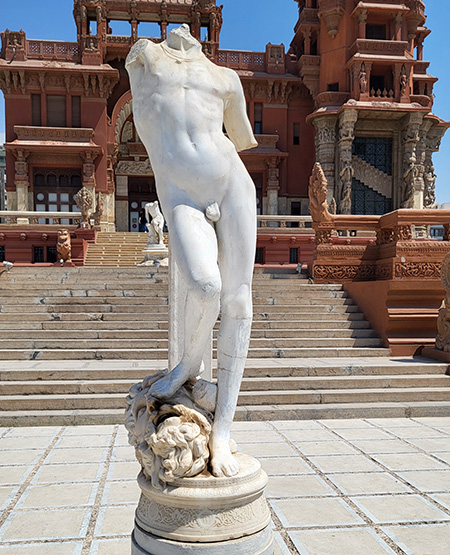
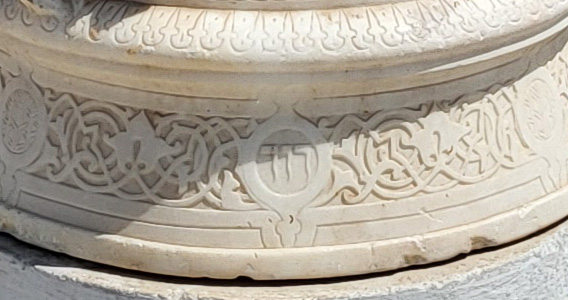
In the Old Testament, the giant Philistine warrior Goliath was defeated by the young Israelite shepherd David using a sling. It is the original underdog story. But why is a Biblical tale depicted in this Hindu-inspired temple? It is difficult to say. However, a bizarre detail etched at the sculpture’s base suggests this sculpture may have an entirely different meaning.
Other pieces around the premises also allude to the darker side of spirituality.
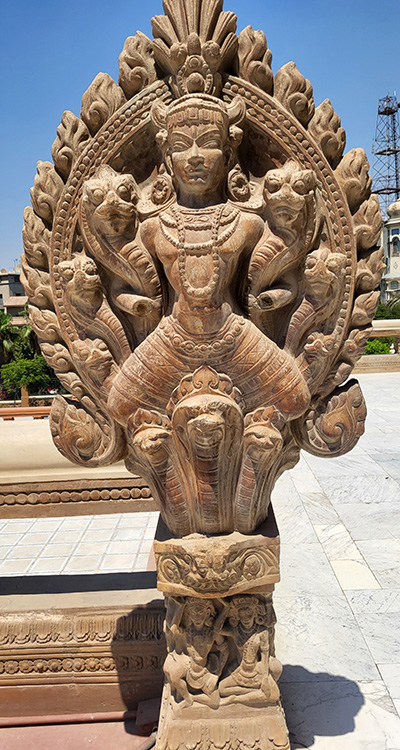
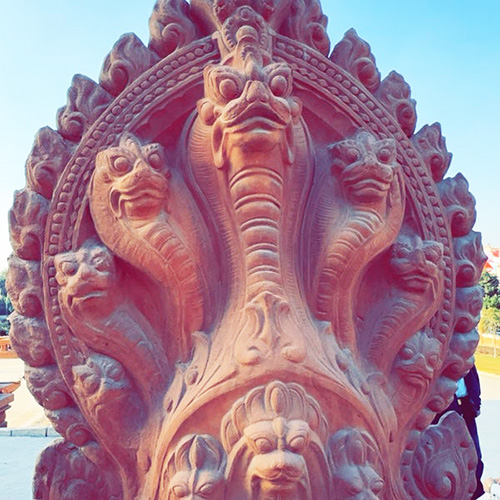
Shiva is the third god in the Hindu trinity, and while he has many forms and meanings, he is often called the “destroyer of worlds.” In the sculpture above, Shiva is clearly in a destructive mood, surrounded by a ring of fire and cobras he uses as weapons. As seen in previous articles, the occult elite loves Shiva, probably because he is known to “destroy the universe to recreate it,” which happens to be the ultimate goal of the elite. Is this why Shiva statues exist in symbolic places such as CERN and the World Health Organization?
Inside the palace, visitors encounter more symbolic art.
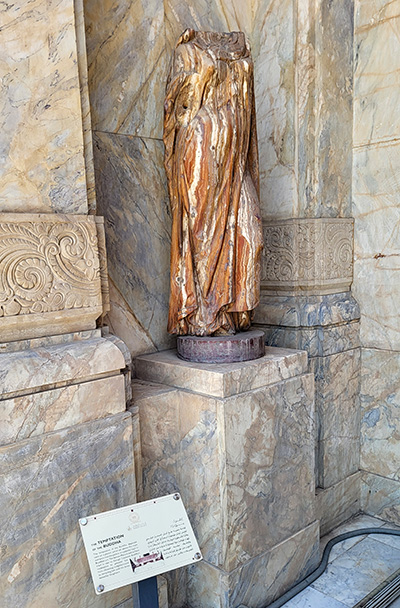
A recurring theme in Buddhist art, this sculpture represents the demon Mara tempting Buddha with his three beautiful daughters, Rati (lust), Trishna (thirst), and Raga (delight).
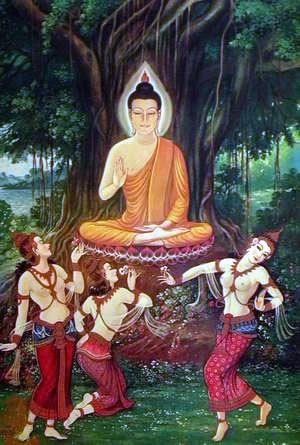
While this story is about resisting temptation, the Baron probably selected it because it involves demons, lust, and seductive daughters.
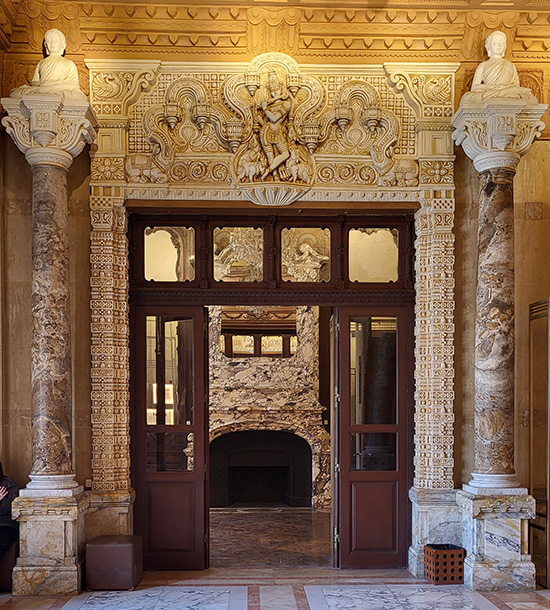
Most of the palace’s original objects and furniture are long gone, leaving visitors to gaze at mostly empty rooms. However, visitors can still experience one of the palace’s most striking features.
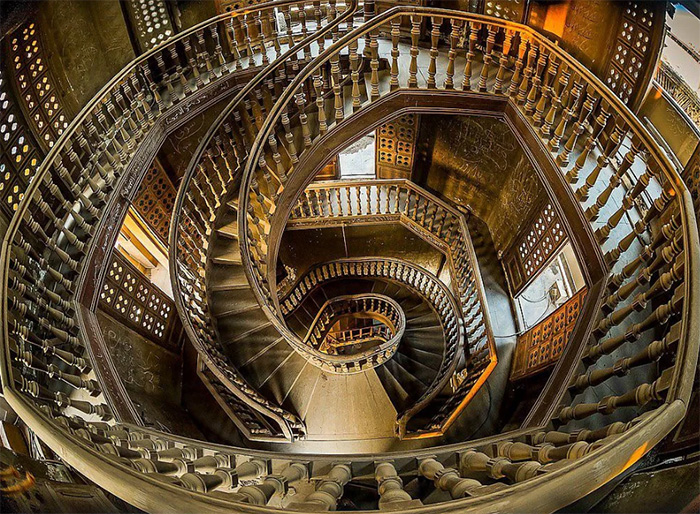
It is from the top of this staircase that the Baron’s wife fell to her death. This grim fact sums up the story of the Baron Empain Palace: Behind the guise of wealth and luxury lay complete moral decay, profound distress, and a cloud of dark energy that can still be felt today.
In Conclusion
The Baron Empain Palace is the definition of a “sinister site.” A man of incredible wealth built it and connected it to the world’s most powerful dynasties (the Rothschilds). Not unlike the elite of today, he was obsessed with occultism and mankind’s darkest impulses.
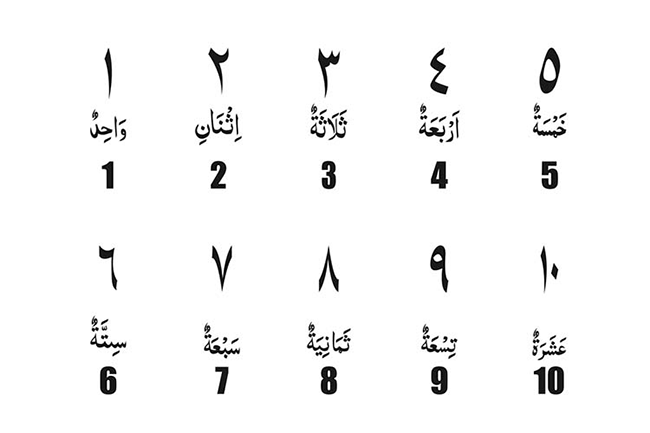
Through a collection of carefully chosen pieces such as Narcissus, Shiva the Destroyer, and the literal number 666, the palace signals (to those in the know) the true purpose of its “temple.” While in its upper levels, the palace welcomed lavish balls and elite gatherings, its lowest levels were the site of dark activities such as occult rituals, orgies, and blood sacrifices. Who even knows what happened in that underground tunnel?
Baron Empain Palace was built on a rotating base so that it could always bask in sunlight. However, despite the unrelenting Egyptian sun, the palace will forever be surrounded by darkness.